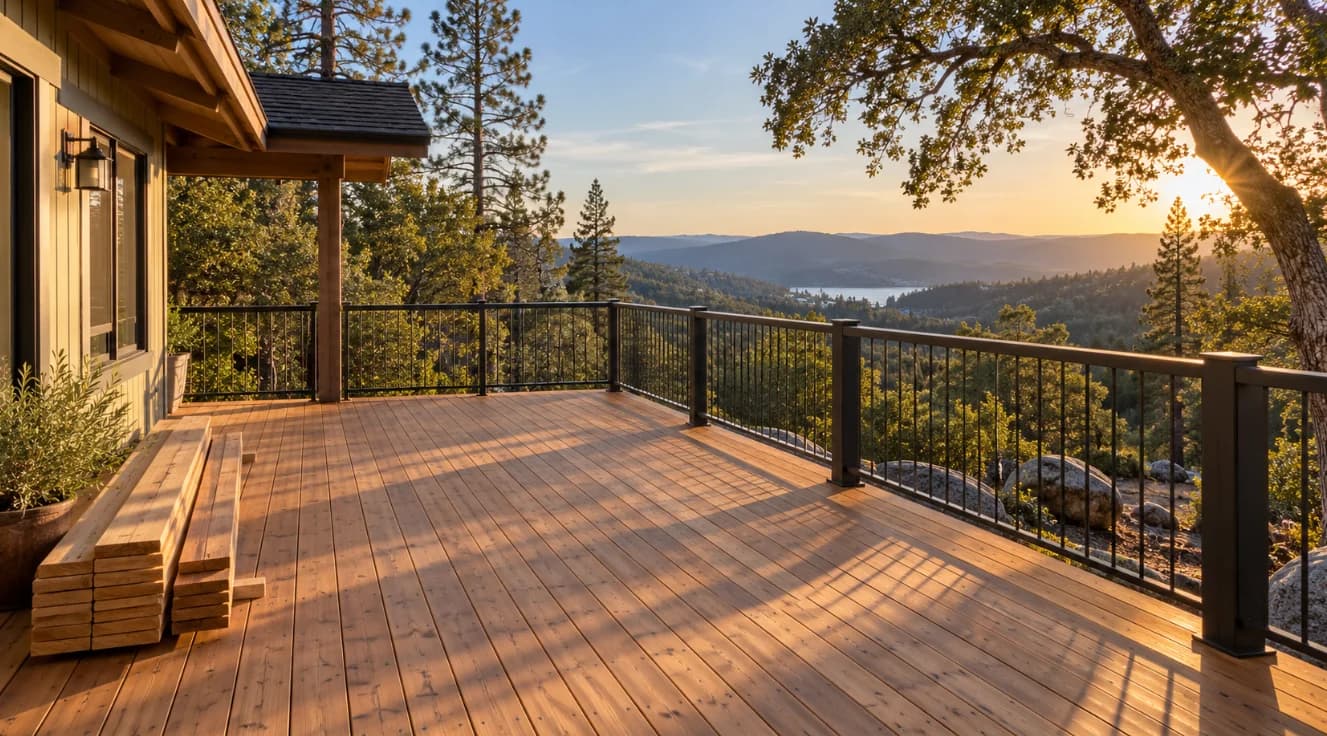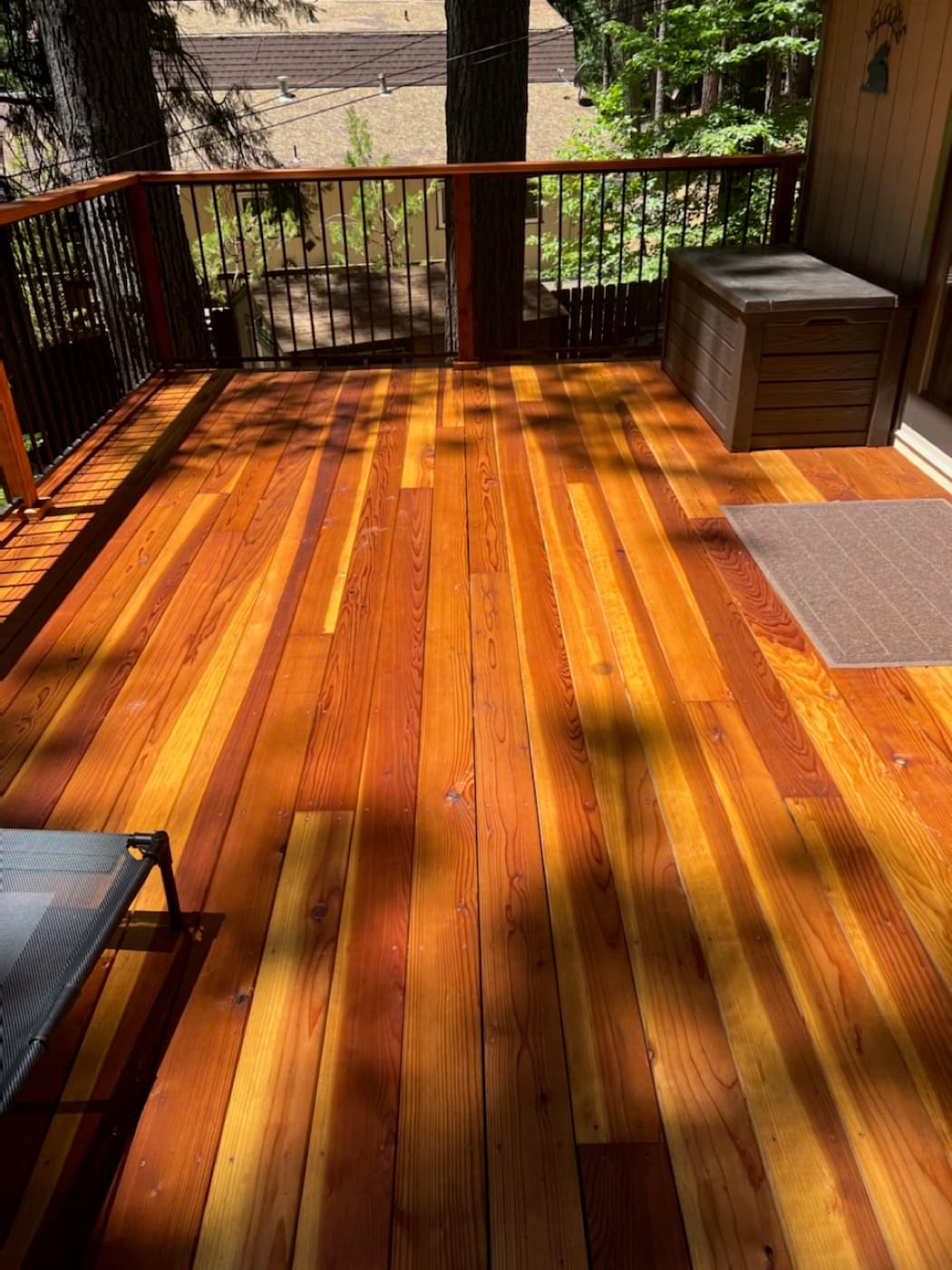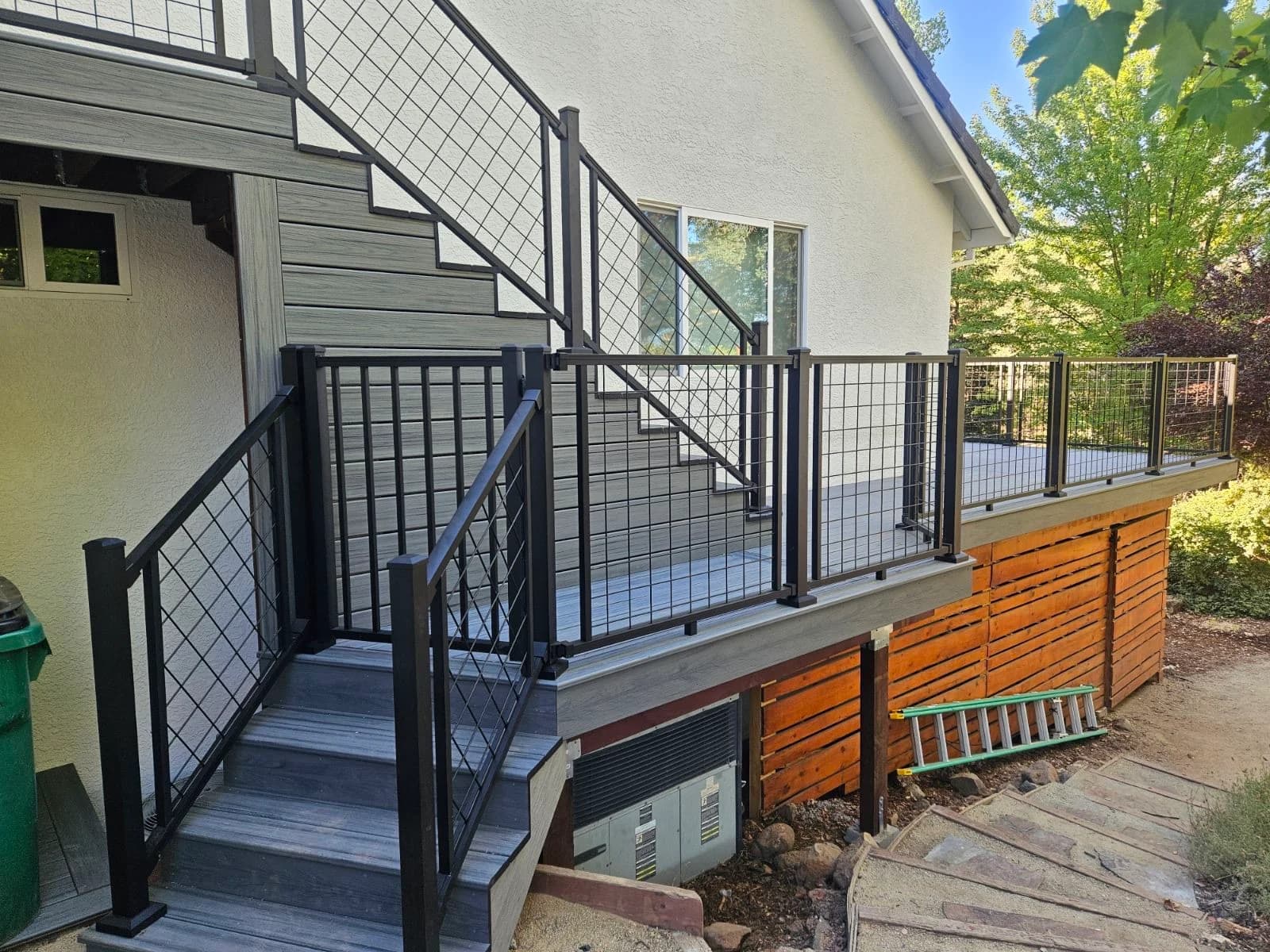
Short answer: for most homes in the Sierra foothills, composite decking is the better long-term choice. It handles hot, dry summers and wet winters without cracking, splintering or needing a stain every couple of years, and several composite lines are suited to California’s wildfire building rules. Wood still wins on upfront cost and natural look, and it makes sense for budget builds, rentals or homeowners who enjoy the upkeep.
We build both, and as a Trex Platinum contractor most of what we install is composite. Here is how the two compare in the conditions decks actually face in Placerville, Pollock Pines, El Dorado Hills and the rest of El Dorado County.
Composite vs. Wood at a Glance
| Wood (pressure-treated, redwood, cedar) | Composite (Trex and similar) | |
|---|---|---|
| Upfront cost | Lower | Higher, often 30–60% more for the surface |
| Maintenance | Clean, sand and seal or stain every 1–3 years | Wash once or twice a year |
| Typical lifespan | 10–20 years with regular care | 25–30+ years |
| Splinters and cracking | Yes, especially in strong sun | No |
| Heat underfoot | Stays cooler | Gets warmer; lighter colors help |
| Look | Real grain that weathers to gray | Wood-look grain that holds its color |
| Warranty | Limited, mainly on the treatment | Long manufacturer warranties, often 25 years or more |
How Foothill Weather Treats a Deck
Summer sun and heat
Long, dry summers with strong UV are hard on wood. Boards dry out, check and cup, and the finish breaks down within a season or two on a south- or west-facing deck. Capped composite has a protective shell that resists fading and staining, so it holds its color far longer. The trade-off is heat: composite gets warmer than wood in direct afternoon sun. Choosing a lighter color, or adding shade with a pergola or cover, makes a big difference.
Winter rain, snow and freeze-thaw
At higher elevations such as Pollock Pines, decks see snow and repeated freeze-thaw cycles. Water that gets into wood expands when it freezes, which opens cracks and speeds up rot. Composite absorbs very little water, so it handles wet winters without swelling or splitting. Either way, what sits underneath matters most: the framing is still wood, and it needs proper joist protection, drainage and a flashed ledger to last.
Fire Season and California’s Wildfire Building Rules
Fire season has changed what homeowners in El Dorado County want on the outside of their houses, especially since the 2021 Caldor Fire. If your home sits in a designated Fire Hazard Severity Zone, which covers much of the county, California’s wildland-urban interface rules (Chapter 7A of the California Building Code and Section R337 of the California Residential Code) can limit which decking materials you are allowed to use near the house.
In practice this means the decking has to meet the state’s ignition-resistance standards. Several composite products are tested and listed for these requirements, while ordinary untreated wood often is not. You can check your address on the Office of the State Fire Marshal fire hazard maps, and a local contractor should confirm the requirement for your lot before you choose a material.
No deck is fireproof. Keeping leaves and needles off the surface and out of the gaps, and keeping the space underneath clear, matters as much as the board you choose.
Maintenance: The Real Difference Over Time
The biggest gap between the two materials is not on day one. It is in the years after.
- Wood needs a yearly wash, and sanding and resealing or restaining every one to three years, depending on sun exposure and the species. Skip it and the boards gray, split and eventually rot.
- Composite needs a wash with soap and water or a soft brush once or twice a year. No sanding, no staining, no sealing.
Add up a decade of stain, weekends and the occasional board replacement, and much of composite’s higher upfront price comes back to you.
Cost Over the Life of the Deck
Composite usually adds 30–60% to the price of the decking surface, but the framing, footings, railing and labor cost about the same either way. That means the difference in the total project is smaller than the difference in the boards. For a full breakdown of what a deck costs here, see our 2026 deck cost guide for El Dorado County.
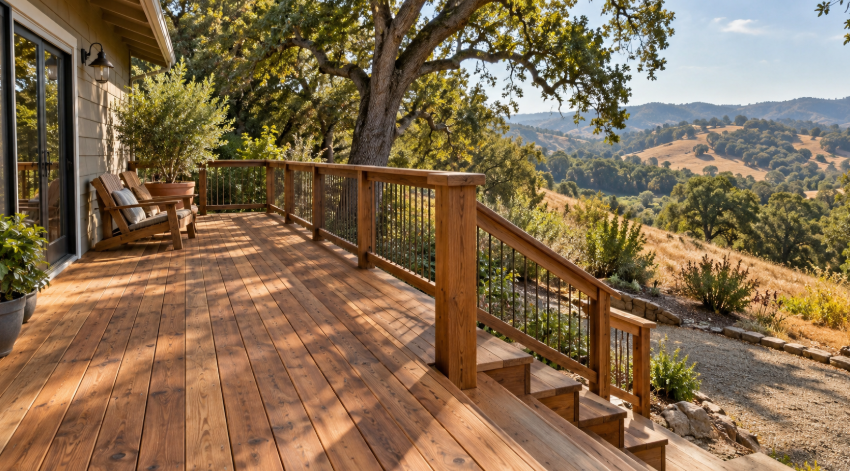
When Wood Still Makes Sense
- You need the lowest upfront cost, for example on a rental or before a sale
- You want real wood grain and do not mind the upkeep
- The deck is shaded and low to the ground, where wood lasts longer
- Your home is outside the fire hazard zones that restrict decking choices
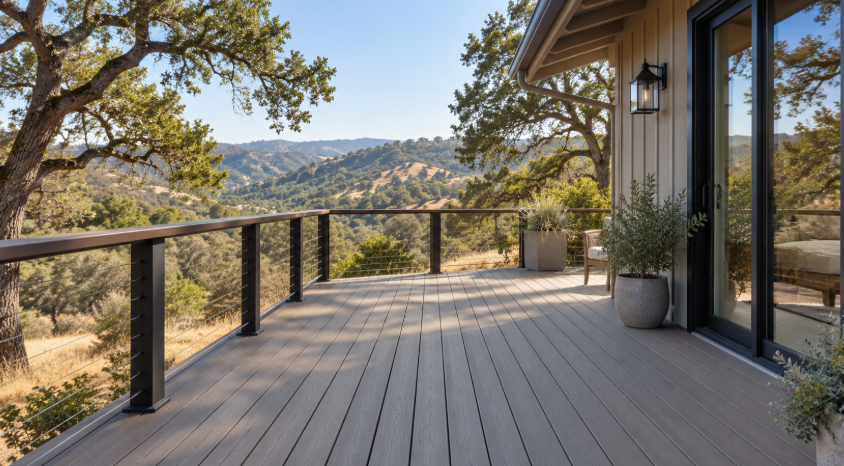
When Composite Is the Better Choice
- You plan to stay in the home for ten years or more
- The deck faces full sun or gets wet and snowy winters
- You have kids or pets and want a surface with no splinters
- Your property is in a Fire Hazard Severity Zone
- You would rather spend weekends on the deck than refinishing it
Why We Build Most of Our Decks With Trex
Cademartori Construction is a Trex Platinum contractor, the top tier of Trex’s contractor program. We build across the full range, from the entry line to the deeper-grain composites that hold their color through a foothill summer, and we frame every deck to the joist spacing the manufacturer specifies so the warranty holds. Typically that is 16 inches on center for straight decking and 12 inches for diagonal layouts.
Frequently Asked Questions
Does composite decking get too hot to walk on?
It gets warmer than wood in direct sun, especially darker colors. Lighter shades, newer heat-reducing composite lines and some shade overhead keep it comfortable for most of the summer.
Can you put composite decking on an old wood frame?
Sometimes. If the existing framing is sound and the joists are spaced to the manufacturer’s specification, resurfacing with composite is an option. If the joists are too far apart or showing rot, the frame needs work first.
Is composite decking slippery when wet?
Capped composite with an embossed grain has good traction for most uses. As with any outdoor surface, keep it clear of algae and wet leaves.
How long does a composite deck last?
Quality composite decking commonly lasts 25 to 30 years or more, and the leading brands back it with long limited warranties against fading, staining and structural defects.
Talk to a Trex Platinum Deck Builder in Placerville
Not sure which material fits your lot and budget? We will walk the site with you, check the fire-zone requirements for your address and price both options side by side. Learn more about our custom deck building service, or request a free estimate and call us at (530) 306-0115.
 Keep Reading